Monday, February 28, 2011

School would track fitness, keep kids longer

health
A local charter school hopes to launch an ambitious program this fall that would keep students in school for 12 hours a day and track the impact of physical fitness on their grades.
The Let's Move Academy for freshmen and sophomores at Dohn Community High School would be the first in the region - and perhaps the nation - to track and tie health to academics, school officials say. It would also be the first mandatory after-school program in the state at a public school according to the Ohio Department of Education. It is contingent on the school winning around $130,000 in local and federal grants to help pay for it. The school will find out about its grant applications in April.
The program would combine physical fitness activities and nutrition lessons with academics, tutoring and character development classes. Dohn will also provide healthy meals for the students.
The goal is to improve students' health and in turn raise their grades and graduation rates.

Read More

Friday, February 25, 2011

Fitness expert explains ways to manage stress

stress
With Spring Break just a few weeks away, Fake Patty's Day looming over the horizon, midterms coming up and Kansas weather teasing us with no end in sight, it's safe to say this time of year is particularly stressful for college students.
While the stress might seem difficult to handle at times, there are many ways to de-stress and also improve your health in the process.
There's a new fitness website, DailyBurn.com, that is rapidly gaining popularity with over a million users already. With iPhone apps, workout plans, meeting motivators and groups, the website provides a variety of ways to accommodate the need of any person looking to stay healthy and get in shape.
Kate Brown, community manager of DailyBurn and certified fitness trainer, was able to offer specific tips for college students to help keep fit and manage stress.
Given that the typical college student is incredibly busy, many people might say they just don't have the time to exercise. Taking into account the life of a college student, Brown said high-intensity workouts are great to do in the middle of a study break. She said they require only the use of your own body weight and help reduce stress and refocus if you're knee-deep in an intense study session.
"What you're going for is speed and to get the most bang for you buck," Brown said.
There are three particular exercises she recommended. Body squats (as many as you can do in one minute), plank pushups and the cross body chop. Brown also said taking 30 minutes out of your day to go for a jog with a workout buddy is more beneficial than you might think.

Read More

Thursday, February 24, 2011

Seniors face unique oral health challenges

health
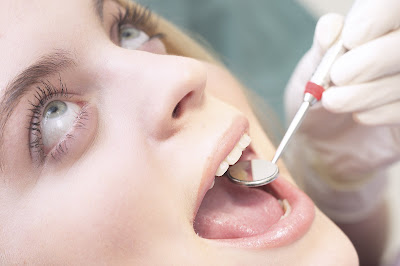
The fact we're living longer and keeping our natural teeth longer is making seniors' oral health increasingly complex, says Dr. Mary McNally, an associate professor of dentistry at Dalhousie University.
"The situation has changed from even a generation ago," she says.
"Then, the profile would be quite different in longterm care. Now, many of the people have much higher needs. As well as living longer, the data show that they are frailer and more of them have dementia."
Canadians' life expectancy is now an average of 80.7 years, compared to 78.4 a decade earlier, and the population balance is changing, according to Statistics Canada. In 1996, there were 3.5 million seniors in Canada. By 2021, the number is expected to almost double to 6.9 million.
Many members of this older generation are likely to have more or all of their natural teeth.
"We really have improved our oral health in the last 40 years," says Dr. Peter Cooney, the chief dental officer for Canada, citing the most recent Canadian Health Measures Survey.
"People are keeping their teeth much more. Only about six per cent of the Canadian population has full dentures."
The increase in the number retaining their teeth complicates the work of care providers, adds McNally.
"All of a sudden, the care sector has inherited people with lots of teeth, when, a generation ago, they would have had their teeth in a glass by the bed. Trying to brush someone else's teeth is not easy, especially people with dementia."
Phil Hughes, former president of the retired teachers organization of Nova Scotia and former chair of the Group of IX Nova Scotia Seniors' Organizations, says he is "very concerned with all aspects of senior oral health, in particular, the barriers faced by seniors."
He cites a long list of issues ranging from the cost of care, the lack of dental insurance or public dental programs to living in rural areas without easy access to a dental office, fear of dental visits and disease and disability "that makes brushing or flossing extremely challenging."

Read More

Wednesday, February 23, 2011

Health and Fitness Facts


Health and Fitness – Many people these days have been very obsessed on how they look. Easy as it may seem but little did we know that having a healthy and fit body will be very hard to achieve.
You have to deal with a lot of patience. Especially in a world full of stressors and workloads it could not get any easier to reach the goal of being healthy and fit. First you must be cautious on what you are eating and drinking.
You have to abate the fats, calories and carbohydrates. But not to the extent that you will not eat or drink any of them just lessen. You also have to exercise and get enough rest to gain both.
Health and Fitness come together, in order to be healthy you have to be physically fit. It is not merely about being free from injury or sickness it is a thoroughgoing of being physically, mentally and having a very good welfare.
Fitness is about getting enough nourishment and adequate exercise. Remember too much or too little of something is not good. Moderation is the key to all of these.
After all the efforts for having a healthy and fit body it will all pay off just as long as you don’t cheat and must continue to live a stress free life you will be able to get what you really want . Just keep in mind the famous quotation, “No Pain, No Gain.”

Read More

Tuesday, February 22, 2011

senior fitness – for body and mind


There are some things you are never too old to do. Learning new tricks, falling in love, and keeping in shape.
According to research, the most important thing on that list for seniors is staying in shape.
"There is new evidence that senior citizens can preserve the size of their brain and memory into old age by walking regularly at least 6 miles per week," a recent study supported by the National Institute on Aging states.
So it appears, staying in shape for seniors can make learning new tricks easier and make falling in love something they can remember.
"Brain size shrinks in late adulthood, which can cause memory problems," said study author Kirk I. Erickson in "Senior Journal."
In his study, Erickson recorded the number of blocks walked per week in 299 dementia-free people with an average age of 78. The study found that people who walked at least 6 to 9 miles per week, had greater gray matter volume than people who don't walk as much and less problems with memory loss and dementia.
As often as weather permits, Bud Gott, 86, of Corning, walks the length of the town, from his home to the post office and back everyday.
A veteran of Iwo Jima, Gott said the activity has kept him in shape and has become a welcome habit.
Got also continues to do his own yard work which includes mowing his large lawn with a push mower.
Meredith Allen, athletic trainer and physical therapy assistant at Physical Therapy and Wellness Center in Corning, says staying fit is important for seniors.
"Physical fitness is important for the aging adult in helping prevent injuries," said Allen. "Walking and light resistive weight training can also help with joint discomfort and muscle fatigue."
A study published in the "Journal of the American Medical Associations" found physical activity of at least 150 minutes per week can lower the risks of chronic diseases and help ward off obesity. That is 30 minutes a day, five days a week, or 50 minutes three times a week.

Monday, February 21, 2011

Local health clinics desperate for financial savior

Health
Palm Beach County health leaders are searching for a white knight after Gov. Rick Scott zeroed out clinic care from his proposed budget for the Florida Department of Health.
So far, no rescuers are stepping forward.
The state manages seven clinics that serve vulnerable people in Palm Beach County: the uninsured, the homeless, migrant workers, those on Medicaid, those lacking a doctor.
The clinics care for pregnant women, people with HIV/AIDS, patients with chronic diseases such as diabetes, people with infectious diseases - anyone with nonemergency medical needs.
The health department saw about 67,000 clients last year from Pahokee to Delray Beach, and if the state agency pulls its $5 million contribution, the entire $30 million program risks closure or dramatic shrinkage, warned Dr. Claude Earl Fox, who heads the Florida Public Health Institute in Lake Worth.
"If the health department gets out of primary care, which it looks like it may, you are talking about 40,000 to 60,000 patients who are going to have nowhere to go," Fox said. "I am not sure the capacity exists elsewhere to handle those patients."
Fox raised the specter of hospitals routinely seeing women showing up in the ER to give birth who have never visited a doctor, kids with ruptured eardrums from untreated infections and diabetics in comas from lack of insulin.
"This is something that could affect a lot of people in a very adverse fashion," Fox said.

Wednesday, February 16, 2011

What's the key to long-term heart health?


Moderation is Jesse Weiskopf's philosophy. Weiskopf, who just celebrated his 97th birthday, never really worked out hard when he was younger.

"It's not that I worked out, but I always did something. I'm an introverted person and this is my outlet," Weiskopf said. These days, though, he goes to the gym a couple times a week.

"I don't lift hundreds of pounds. I do a little of everything. I'm just trying to be sensible and conservative."

He applies that to his diet too. "I'm not a food nut. I eat everything that's good," said Weiskopf, who tries to avoid sugar, fat and salt. "I don't eat sugar or salt if I can help it."

But moderate exercise, not a strenuous workout session, may be the best medicine, no matter what the age group. The stress of a high-intensity workout, said Dr. Henry Cusnir, interventional cardiologist at University Hospital and Medical Center in Tamarac, "raises blood pressure to levels that are not healthy" and impose stress on the aorta and heart. "It's much more harmful than beneficial," Cusnir said.

Dr. Errol Campbell, MD of internal medicine at University Hospital, said a lower intensity exercise regimen for a longer period of time is better, as opposed to a more intense exercise program done over a shorter period of time. "What is important is that you are doing some sort of exercise and avoiding a sedentary lifestyle," Campbell said.

According to the World Health Organization, in 2008 Japan tied with San Marino for the highest average life expectancy, 83.

In Japan, nowhere are the benefits of moderation more apparent than in Okinawa, which has more per capita centenarians than anywhere else in the world.

The Okinawa Centenarian Study – conducted by Makoto Suzuki, MD, PhD, Dr. Craig Willcox, PhD and Bradley Willcox MD, MS – found that elderly Okinawa residents had an 80 percent lower risk for coronary disease compared to citizens in Western nations.

Related Content

Related Posts Plugin for WordPress, Blogger...